 Book via WhatsApp!
Skip to content
Book via WhatsApp!
Skip to content


The rise of ride-sharing services has significantly transformed the transportation landscape, particularly affecting traditional taxi services. Today, this article delves into the impact of ride-sharing on the taxi industry, focusing on economic changes, regulatory challenges, and evolving consumer preferences.
Readers will gain insights into how these dynamics shape the future of taxi services, especially in regions like Maidstone and Kent. As ride-sharing platforms gain popularity, traditional taxis face challenges in maintaining market share and adapting to new consumer demands.
How Has Ride-Sharing Economically Affected Maidstone Taxi Services?
The economic impact of ride-sharing on Maidstone taxi services can affect revenue streams and market dynamics. Ride-sharing platforms have introduced competitive pricing models that challenge traditional taxi fares, which can put pressure on taxi revenues.
This shift has forced taxi operators to rethink their pricing strategies and service offerings to retain customers. Additionally, the convenience and accessibility of ride-sharing apps have altered consumer behavior, prompting a reevaluation of how taxi services can meet evolving demands.
Market Share Changes in Maidstone and Kent
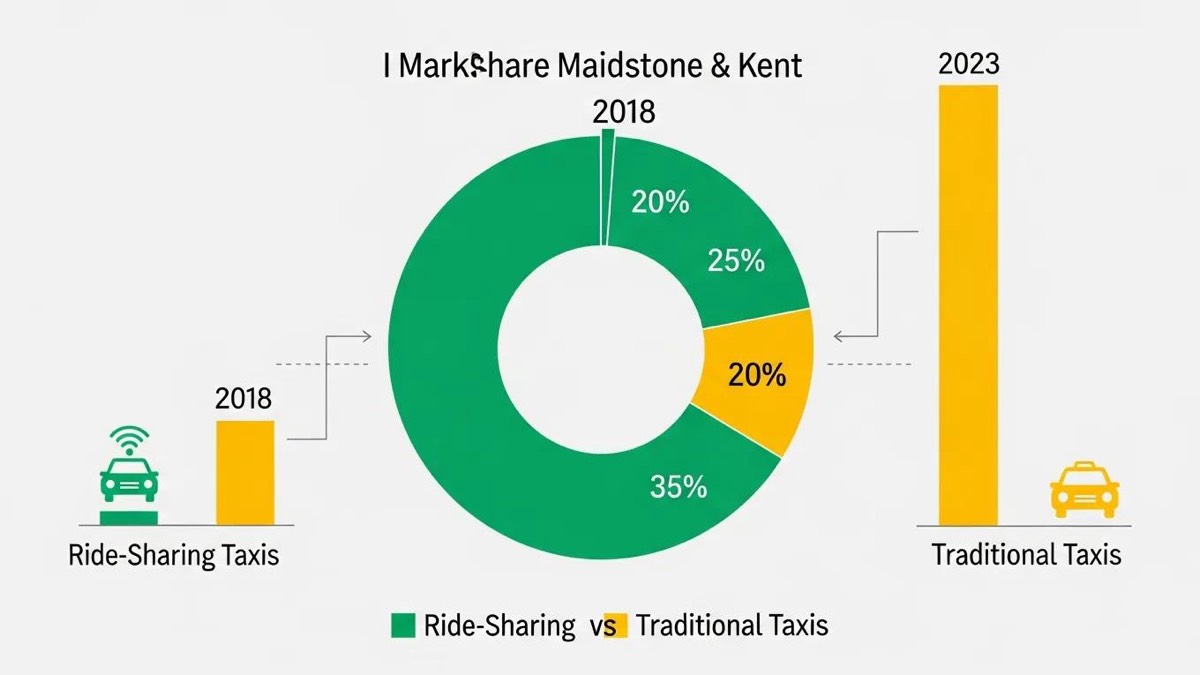
In Maidstone and Kent, the market share between ride-sharing services and traditional taxis may have shifted as customer habits changed. Local market share figures should be supported with current data before estimating ride-sharing’s share in Maidstone and Kent.
This trend may be influenced by app-based platforms that offer simple booking and visible pricing. As a result, traditional taxi services may need to adapt their business models to protect bookings and customer loyalty.
Impact on Taxi Revenue and Demand
The influence of ride-sharing on taxi revenue and demand can appear in lower bookings and changing demand patterns. With the rise of ride-sharing, many consumers now prefer the convenience of booking rides through apps, leading to a decrease in traditional taxi bookings.
Any claim about a local revenue drop should be supported with current data from taxi operators or industry sources. Furthermore, the demand for taxi services has become more volatile, as consumers increasingly switch between ride-sharing and traditional taxis based on price and availability.
What Regulatory Challenges and Adaptations Affect Taxis and Ride-Sharing?
The regulatory landscape for taxis and ride-sharing services is complex and continually evolving. Traditional taxi services face numerous challenges in adapting to new regulations that govern ride-sharing operations, which often differ significantly from those applicable to taxis.
Understanding these regulatory differences is crucial for taxi operators aiming to remain compliant while competing effectively.
Regulations That Differentiate Ride-Sharing from Taxis
In the UK, app-based private hire services and traditional taxis can be regulated differently. Key differences include licensing requirements, insurance standards, and safety protocols. For instance, licensing and vetting rules can differ by operator and council, so safety comparisons should be made carefully.
Additionally, ride-sharing companies often benefit from less regulatory oversight, allowing them to operate more flexibly and at lower costs than traditional taxi services.
Local Policies Affecting Taxi Services in Maidstone and Kent
Local policies in Maidstone and Kent significantly impact the operations of taxi services. The local licensing authority plays a crucial role in determining the regulations that govern taxi operations, including fare structures and vehicle standards.
Compliance with national standards is also essential, as local policies must align with broader regulations. Taxi operators must navigate these complexities to ensure they remain competitive while adhering to safety and service quality standards.
How Have Consumer Preferences Shifted Between Ride-Sharing and Traditional Taxis?
Consumer preferences have shifted in some markets in favor of ride-sharing services, often driven by factors such as convenience, cost, and perceived reliability. Understanding these shifts is essential for traditional taxi services looking to adapt and thrive in a changing market.
Factors Influencing Customer Choice for Airport Transfers and Group Travel
When it comes to airport transfers and group travel, several factors influence customer choices. Booking convenience is paramount, with many consumers preferring the ease of using an app to secure their rides.
Cost predictability also plays a significant role, as consumers seek transparent pricing without hidden fees. Additionally, punctuality and reliability are critical, as travelers prioritize timely arrivals for flights and events.
Role of Trust and Reliability in Taxi Service Selection

Trust and reliability are fundamental in influencing consumer choices for taxi services. Safety standards, such as driver vetting processes and vehicle inspections, are crucial for building consumer confidence.
Furthermore, customer feedback and reviews significantly impact perceptions of reliability, with many consumers relying on ratings to guide their decisions. Traditional taxi services must emphasize these aspects to regain consumer trust and loyalty.
What Advantages Does Express Taxis Maidstone Offer Over Ride-Sharing Platforms?
Express Taxis Maidstone offers local, airport, executive, and group taxi services for customers, helping them compare transport options. Understanding these benefits is vital for consumers seeking reliable transportation options.
Benefits of Local Expertise and Tailored Services
Local expertise is a significant advantage for Express Taxis Maidstone, as its drivers have working knowledge of Maidstone, Kent, London, and the South East.
This knowledge supports airport transfers and group travel options for customers planning local and long-distance journeys. These service options can help customers choose a taxi arrangement that fits the journey.
Unique Features of Executive and Group Transport Services
Express Taxis Maidstone offers specialized executive and group transport services for business, airport, and event travel. These services include executive vehicles, professional drivers, and published airport pricing that can support clearer planning. Customers seeking comfort and professionalism can consider these options for business or leisure travel.
What Are the Future Trends and Technological Innovations in the Taxi Industry?
The taxi industry is poised for significant changes driven by technological advancements and evolving consumer expectations. Understanding these trends is essential for both taxi operators and consumers as they navigate the future of transportation.
Technology Enhancing Taxi Service Efficiency and Safety
Technology plays a crucial role in enhancing the efficiency and safety of taxi services. Innovations such as GPS tracking, in-app safety features, and driver verification systems contribute to a more secure and streamlined experience for passengers. These advancements not only improve operational efficiency but also help build consumer trust in traditional taxi services.
Ride-Sharing’s Impact on Taxi Services in 2026
In 2026, the impact of ride-sharing on taxi services continues to evolve. Market share projections indicate that ride-sharing may capture an even larger portion of the transportation market, necessitating further adaptations from traditional taxi operators.
Regulatory changes and consumer behavior shifts will also play a significant role in shaping the future landscape of the taxi industry, compelling operators to innovate and enhance their service offerings to remain competitive.
Express Taxis: Your Trusted Local Taxi Service in Maidstone
We are a local taxi service offering reliable, customer-focused transport in Maidstone and the surrounding areas. Express combines traditional taxi values with online booking and mobile app convenience for today’s passengers.
Why Choose Express Taxis?
Local Knowledge: Our drivers have working knowledge of Maidstone, Kent, London, and the South East, supporting informed routes and timely service.
Customer-Centric Service: We focus on safe transport, on-time arrivals, and helpful, professional drivers.
Transparent Pricing: Fixed fare prices are available on the app, with no extra charge after midnight except on Bank Holidays.
24/7 Availability: Whether it’s early morning or late at night, Express Taxis is ready to serve you around the clock.
Safety First: All vehicles are regularly inspected, and drivers undergo thorough background checks to guarantee your safety.
Frequently Asked Questions
What are the environmental impacts of ride-sharing compared to traditional taxis?
Ride-sharing services can have both positive and negative environmental impacts compared to traditional taxis. On one hand, ride-sharing can reduce the number of vehicles on the road by promoting carpooling, which may lower overall emissions. However, increased ride-sharing activity can also lead to more cars circulating in urban areas, contributing to congestion and pollution. The net effect often depends on local factors, such as urban density and public transportation availability, making it essential to analyze specific contexts to understand the true environmental impact.
How do ride-sharing services affect employment in the taxi industry?
The rise of ride-sharing services has significantly impacted employment within the taxi industry. Many traditional taxi drivers have faced reduced job opportunities due to the competitive pricing and convenience offered by ride-sharing platforms. Some taxi drivers have transitioned to ride-sharing, but this shift can lead to job insecurity and fluctuating incomes. Additionally, the regulatory environment may not provide the same protections for ride-sharing drivers, raising concerns about job stability and benefits in the evolving transportation landscape.
What role do customer reviews play in the success of taxi services?
Customer reviews are crucial for the success of taxi services, as they directly influence consumer perceptions and choices. Positive reviews can enhance a taxi service’s reputation, attracting new customers and fostering loyalty among existing ones. Conversely, negative feedback can deter potential riders and damage a company’s image. In the age of digital platforms, where consumers often rely on ratings and testimonials, maintaining high service quality and actively managing customer feedback is essential for taxi operators to thrive in a competitive market.
How are traditional taxi services adapting to compete with ride-sharing?
Traditional taxi services are adapting to compete with ride-sharing by implementing various strategies. Many are enhancing their technology, such as developing user-friendly apps for booking and payment, similar to ride-sharing platforms. Additionally, some taxi companies are revising their pricing structures to offer more competitive rates. Improving customer service, emphasizing safety, and promoting local knowledge are also key strategies that traditional taxis are adopting to retain and attract customers in the face of growing ride-sharing popularity.
What are the safety concerns associated with ride-sharing services?
Safety concerns associated with ride-sharing services include issues related to driver vetting, vehicle maintenance, and passenger security. Unlike traditional taxis, which often have stringent licensing and background checks, ride-sharing drivers may not undergo the same level of scrutiny. This raises questions about passenger safety, especially in cases of misconduct or accidents. Additionally, the lack of regulatory oversight can lead to inconsistencies in vehicle safety standards, making it essential for consumers to be aware of these risks when choosing ride-sharing options.
How do ride-sharing services impact public transportation systems?
Ride-sharing services can significantly impact public transportation systems by altering travel patterns and ridership levels. In some cases, ride-sharing may complement public transit by providing first-mile and last-mile solutions, making it easier for users to access transit hubs. However, it can also divert potential riders away from public transportation, leading to decreased revenues and ridership for these systems. The overall effect varies by region and depends on how well ride-sharing integrates with existing public transport options.